Helicopters are built to do something remarkable: take off vertically, hover precisely, move through complex terrain, and reach places that are difficult or impossible for many other aircraft to access. Behind that capability is a powerful partnership between rotor systems, airframes, flight controls, and the helicopter turbine engine.
For aviation enthusiasts, turbine helicopter performance is one of the most fascinating parts of rotorcraft engineering. A turbine-powered helicopter is designed to convert energy into reliable shaft power for the rotor system, allowing the aircraft to operate in demanding environments where responsiveness, durability, and weight management matter.
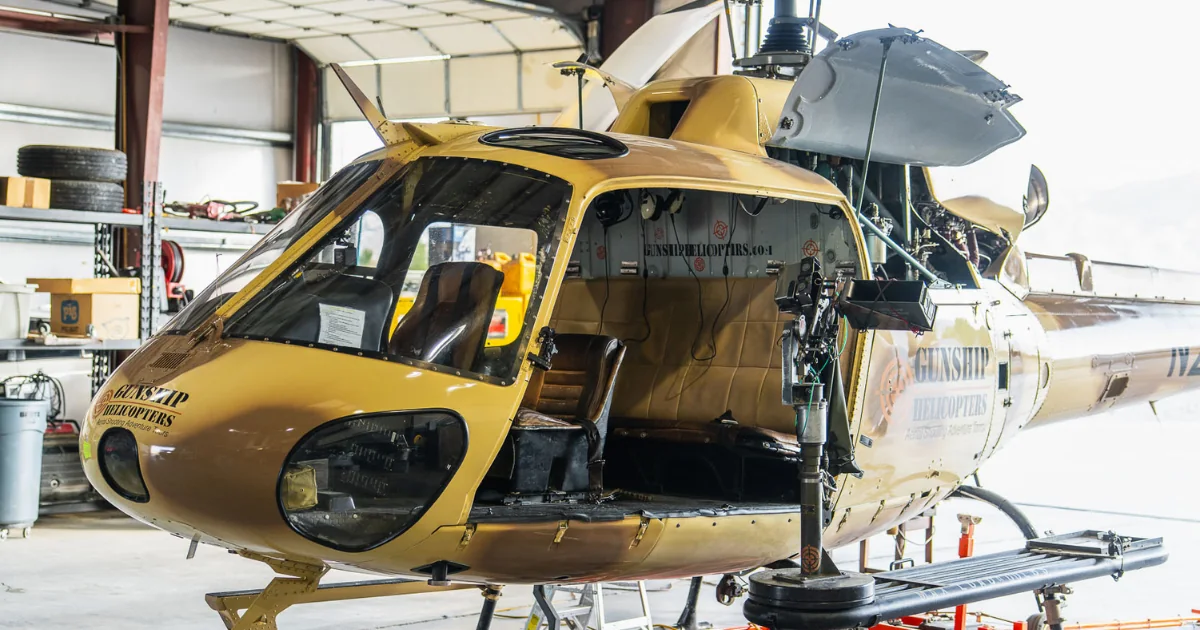
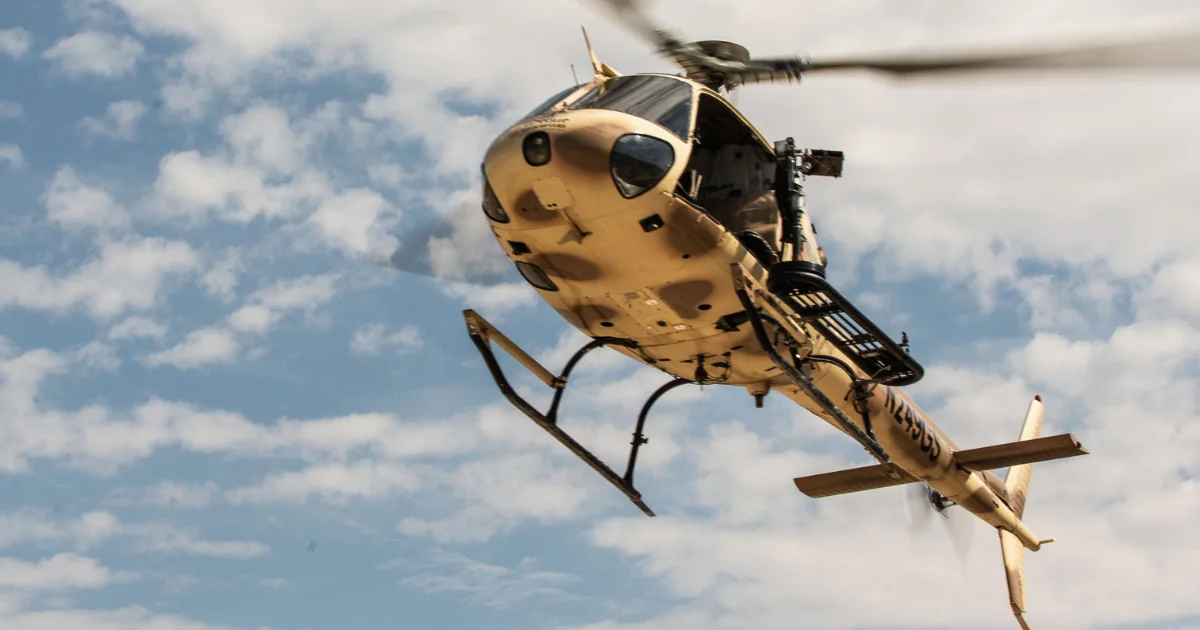
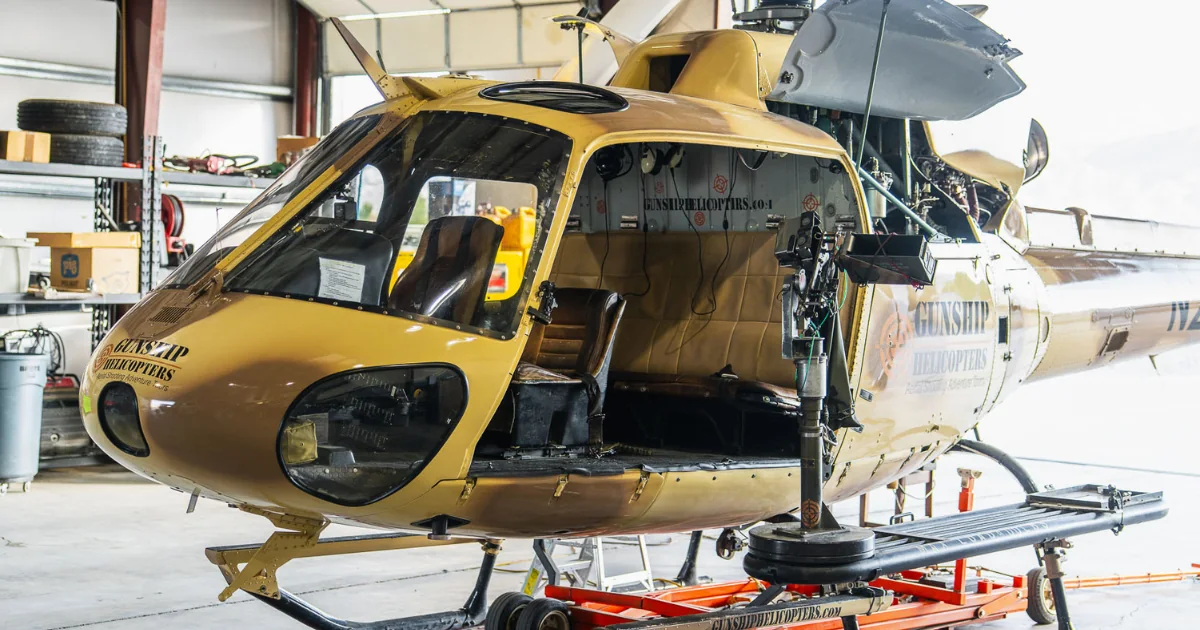
At Gunship Helicopters, guests experience the excitement of flying in an A-Star helicopter above the Nevada desert. While the experience is built around adventure, professional guidance, and guest safety, it also offers a closer look at why high-performance helicopters have become such an important part of modern aviation.
From rescue missions and utility work to aerial filming, military service, and extreme adventure experiences, turbine helicopters are engineered for demanding work. Their combination of power, efficiency, and adaptability is why they remain a defining force in aviation.
What Is a Helicopter Turbine Engine?
A helicopter turbine engine, often called a turboshaft engine, is designed to produce rotating shaft power rather than direct forward thrust. In a helicopter, that power is transferred through the aircraft’s drivetrain to turn the main rotor system.
At a high level, the process begins when air enters the engine. The air is compressed, mixed with fuel, and used to create high-energy gases. Those gases move through turbine stages that drive the engine system and provide power to the helicopter’s rotor components.
This engineering approach differs from the piston engines found in many smaller aircraft. Piston engines use reciprocating components that move back and forth. Turbine engines use a continuous flow of air and rotating machinery. That distinction helps explain why turbine-powered helicopters are often associated with smooth, powerful, and capable performance.
The helicopter turbine engine is not the only factor that determines how an aircraft performs. Rotor design, aircraft weight, weather conditions, elevation, maintenance standards, pilot decision-making, and mission requirements all matter. However, the turbine engine is a central part of the system that gives high-performance helicopters their distinctive capabilities.
Why Turbine Helicopter Performance Matters
Turbine helicopter performance is about more than raw power. It is about how an aircraft produces and manages power in changing conditions. Helicopters operate in a unique environment because their rotor systems must create lift while also responding to movement, wind, terrain, and changing aircraft demands.
A turbine-powered system helps support that complex relationship. Modern helicopter engineering focuses on creating dependable aircraft that can handle varied operational requirements while giving pilots the performance information they need to make responsible decisions.
Several qualities make turbine engines valuable in rotorcraft aviation:
- Strong power output relative to engine weight
- Smooth and continuous power delivery
- A compact design that suits many helicopter airframes
- Reliability for demanding aviation environments
- Long-term adaptability through engineering improvements
These characteristics are important for helicopters used in public safety, utility operations, tourism, medical transport, military service, and specialized aerial work. They also help explain why the sound and feel of a turbine helicopter have become so closely associated with professional aviation.
The Power-to-Weight Advantage
One of the most important principles in helicopter engineering is power-to-weight ratio. A helicopter needs sufficient power while keeping overall aircraft weight within carefully defined limits. Every part of the aircraft, from the airframe to the rotor system, affects that balance.
Turbine engines are valued because they can produce substantial shaft power without requiring the same physical size as many piston-engine alternatives. That compact efficiency gives aircraft designers more flexibility when creating helicopters for different roles.
In practical terms, a strong power-to-weight ratio supports the aircraft’s ability to carry its systems, passengers, equipment, and fuel while still meeting its intended performance requirements. It also gives designers the flexibility to create rotorcraft that can serve a wide variety of missions.
This does not mean that performance is unlimited. Aviation is built on careful operating limits, maintenance requirements, and safety procedures. The best helicopter engineering is not about pushing beyond boundaries. It is about designing an aircraft that performs reliably within them.
For guests who enjoy an aerial adventure, that engineering work is often invisible. Yet it is part of what makes the experience possible. The aircraft, rotor system, turbine engine, and operating procedures all work together to create a controlled and memorable flight environment.
Built for Demanding Environments
Extreme helicopter operations can include work in mountainous terrain, hot climates, remote locations, offshore environments, emergency response settings, and utility corridors. Each environment creates different challenges for aircraft and crews.
Desert conditions are a useful example. Heat, wind, visibility, terrain, and changing weather can all influence aviation planning. High-performance helicopters are designed with these realities in mind, but responsible operations always depend on the aircraft’s approved limits and the judgment of qualified aviation professionals.
Turbine engines are well suited to demanding aviation environments because they are designed for continuous operation and reliable power production. Engine manufacturers and airframe manufacturers devote enormous attention to testing, vibration analysis, drivetrain compatibility, and system integration.
This is not a simple process. A helicopter engine must work in harmony with the rotor system. Changes in power demand, environmental conditions, and aircraft configuration all affect how the overall system performs. Engineers analyze these relationships closely to help ensure that each helicopter model delivers predictable and dependable capability.
Recent aviation standards continue to focus on areas such as turbine-engine vibration environments and engine-to-rotor compatibility, demonstrating how detailed and ongoing helicopter engineering remains. SAE International
How Turbine Engines Support High-Performance Helicopters
High-performance helicopters are not defined by a single feature. They are the result of integrated design. The engine provides power, but the aircraft must also use that power effectively through its transmission, rotor system, controls, aerodynamics, and airframe.
The rotor system is especially important. A helicopter’s main rotor creates lift and allows the aircraft to maneuver in ways that fixed-wing aircraft cannot. The turbine engine provides the energy that supports that system, while the drivetrain transfers that energy in a controlled way.
This coordination allows helicopters to perform tasks that are uniquely valuable in aviation. They can hover, land in limited areas, access remote terrain, and operate where runways are unavailable. These capabilities make helicopters essential tools across many industries.
For aviation enthusiasts, understanding this connection adds depth to the experience of seeing a turbine helicopter in action. The aircraft is not simply flying. It is balancing complex forces through a carefully engineered system that has been refined over decades.
That refinement remains an active area of innovation. Engine manufacturers continue to improve components, controls, efficiency, durability, and lifecycle support. For example, modern turboshaft engine programs focus on reliable performance and ongoing upgrades that support popular helicopter platforms. Rolls-Royce
The Role of Helicopter Engineering
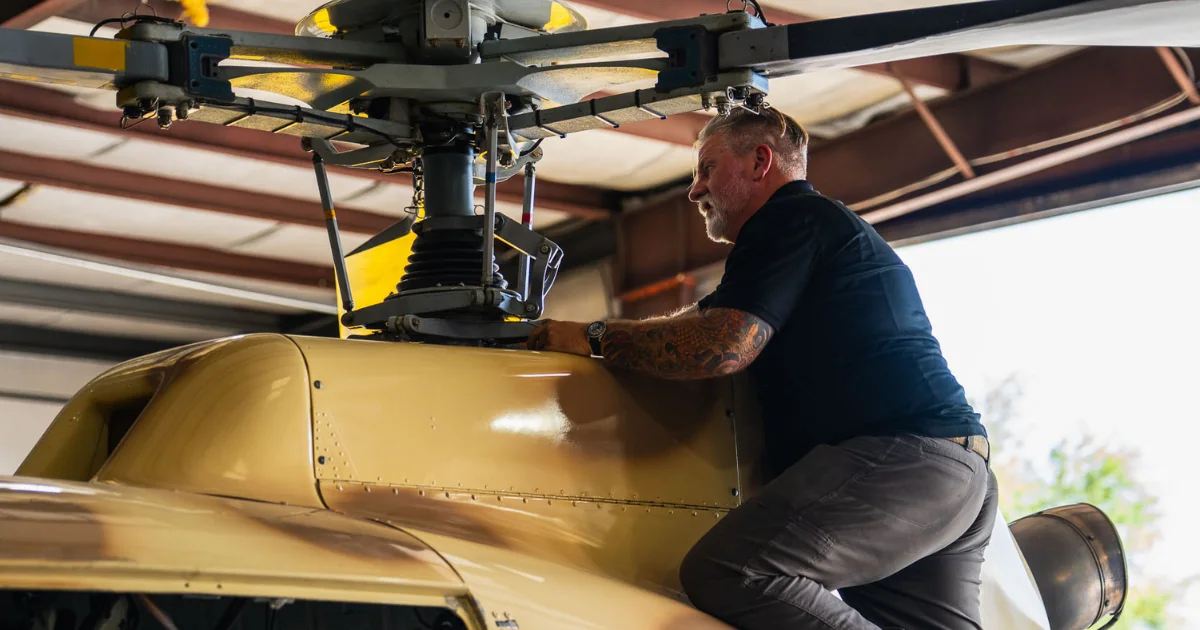
Helicopter engineering brings together many disciplines. Aerospace engineers, engine specialists, materials experts, maintenance teams, avionics professionals, and pilots all contribute to the development and responsible operation of rotorcraft.
The work begins long before an aircraft enters service. Engineers study airflow, rotor behavior, vibration, temperature, structural loads, and system reliability. They test how components perform together and evaluate how the aircraft behaves under the approved conditions it may encounter.
Materials also play an important role. Helicopters must be strong enough to handle demanding aviation environments while remaining as efficient as possible. That need has led to advances in airframes, rotor blades, engine components, and integrated aircraft systems.
For guests, these details may not be immediately visible, but they shape every aspect of the experience. The confidence of a well-designed aircraft, the responsiveness of a rotor system, and the professionalism of the team all reflect the broader world of helicopter engineering.
Aviation Performance Meets Extreme Adventure
A helicopter adventure is exciting because it combines movement, elevation, scenery, and a sense of possibility. The Nevada desert adds another layer to that experience. Its wide-open terrain and dramatic landscape create a setting that feels far removed from an ordinary Las Vegas itinerary.
Gunship Helicopters uses A-Star helicopters to create an aerial adventure for visitors seeking a Las Vegas adrenaline experience. Guests receive a safety briefing and clear guidance from range safety officers before taking part in the experience. That focus on preparation and communication helps create an environment where guests can enjoy the excitement while understanding the importance of safety.
The appeal is not just the helicopter itself. It is the combination of aviation, desert scenery, and a rare aerial shooting environment. Guests can appreciate the power and presence of a turbine helicopter while taking part in one of the most unique experiences in Las Vegas.
For thrill-seekers, that makes it an adventure unlike a standard sightseeing flight. For aviation enthusiasts, it is an opportunity to see how high-performance helicopters bring engineering and real-world experience together.
Why Turbine Helicopters Continue to Shape Aviation
The future of helicopter engineering will continue to focus on efficiency, reliability, performance, and smarter aircraft systems. Turbine engines remain central to that future because they have proven their value across decades of rotorcraft development.
Advances in digital controls, materials, component design, diagnostics, and engine integration are helping make modern helicopters more capable and easier to support. At the same time, the basic principle remains unchanged: dependable power must work in harmony with the rotor system.
That relationship is what makes helicopter aviation so distinctive. A turbine helicopter is not only a machine built for speed or power. It is a carefully balanced aircraft designed to operate in environments where precision, adaptability, and responsible performance are essential.
For people who love aviation, that is part of the fascination. Every flight represents a remarkable amount of engineering, planning, and teamwork.
Experience the Power of Aviation in Las Vegas
Turbine helicopter performance is built on thoughtful engineering, disciplined maintenance, and the ability to deliver dependable power to a complex rotor system. From emergency response and utility work to aviation tourism and extreme helicopter operations, turbine-powered rotorcraft continue to prove why they are among the most versatile aircraft in the sky.
At Gunship Helicopters, guests can experience the excitement of an A-Star helicopter in a setting designed for adventure, professional guidance, and safety. The Nevada desert, the power of rotorcraft aviation, and the energy of a helicopter shooting experience come together to create something that feels truly extraordinary.
Gunship Helicopters has also earned Tripadvisor Travelers’ Choice Awards in 2025 and 2026, recognizing the business among the top 10% of attractions worldwide. For travelers and aviation enthusiasts looking to experience high-performance helicopters in an unforgettable setting, explore available experiences at Gunship Helicopters.